
How We Broke Healthcare
American health care was never designed to cover everyone. It grew out of an accident of history, was patched when the gaps got too big, and then was reshaped by companies that found ways to profit from it. Here is that story in seven chapters, and why today's Medicaid cuts hit so hard.
Medical insurance agencies have become for-profit businesses instead of the service organizations they were intended to be.
Significant Healthcare Events in the US
Most medical insurance agencies, hospitals, clinics and even doctors, have become for-profit business entities instead of the service organizations they were intended to be.
-
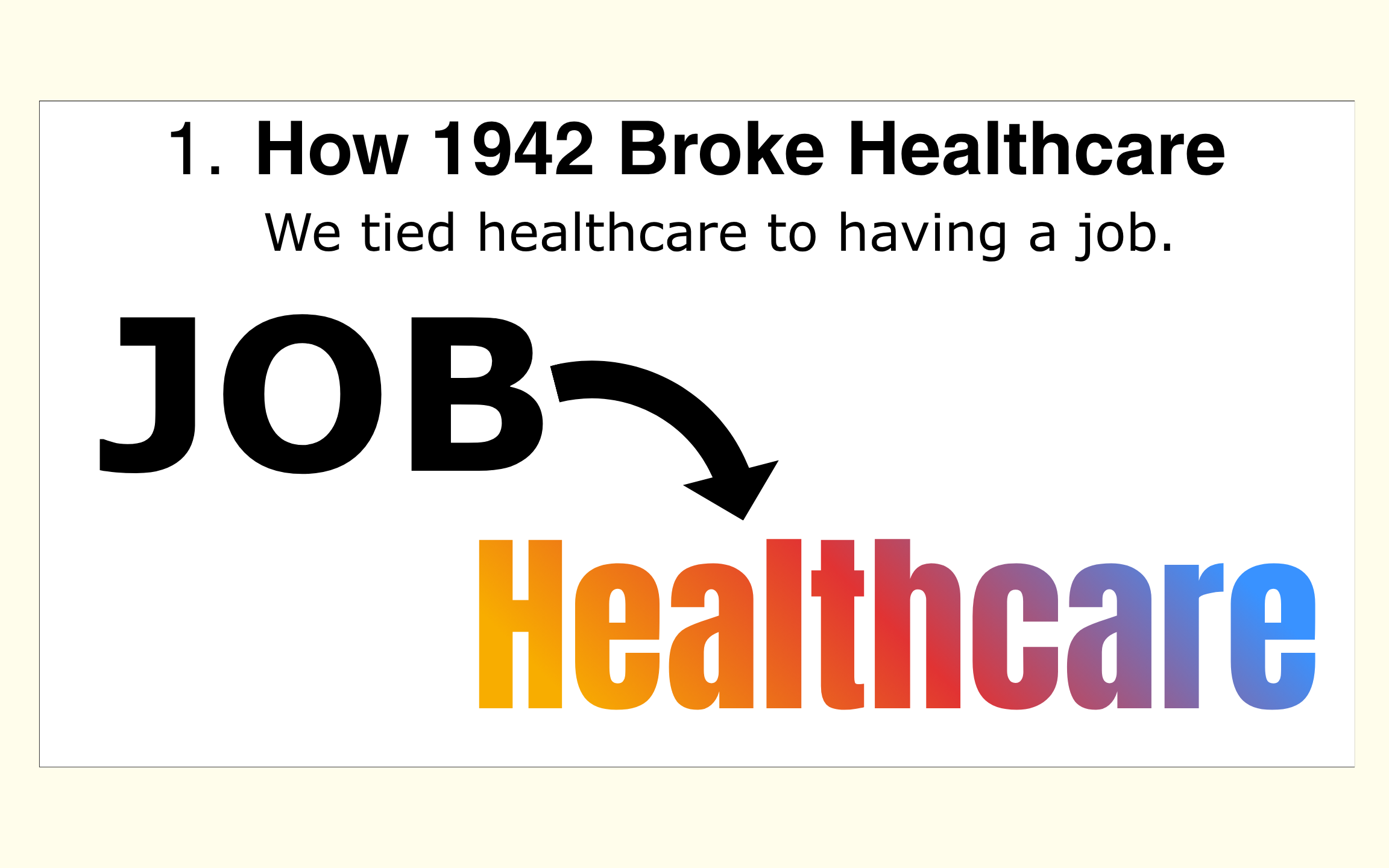
During World War II:
The federal government froze wages.
Employers started offering health insurance as a benefit to attract workers.
The IRS made employer health benefits tax-free.
-
Congress makes employer-paid health insurance tax-free, locking in the job-based system.
A dollar of health benefits was suddenly worth more than a dollar of pay. Employers and workers both had a reason to stay in the system.
-
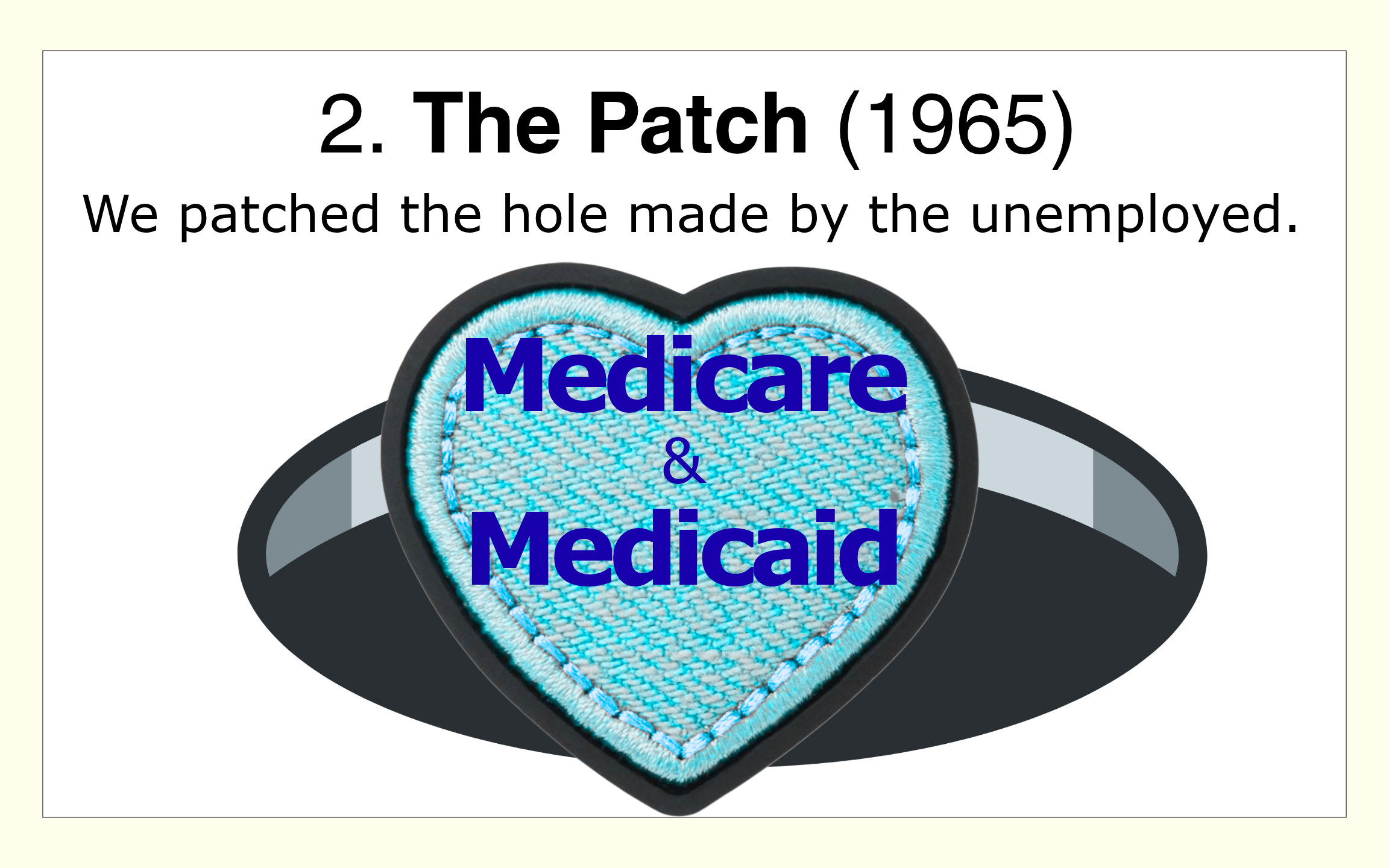
When Medicare and Medicaid were created:
Millions of uninsured elderly and low-income Americans gained health insurance coverage.
All hospitals were paid on a cost basis (as defined and limited by the government).
The elimination of uninsured healthcare allowed hospitals to expand and improve services.
-
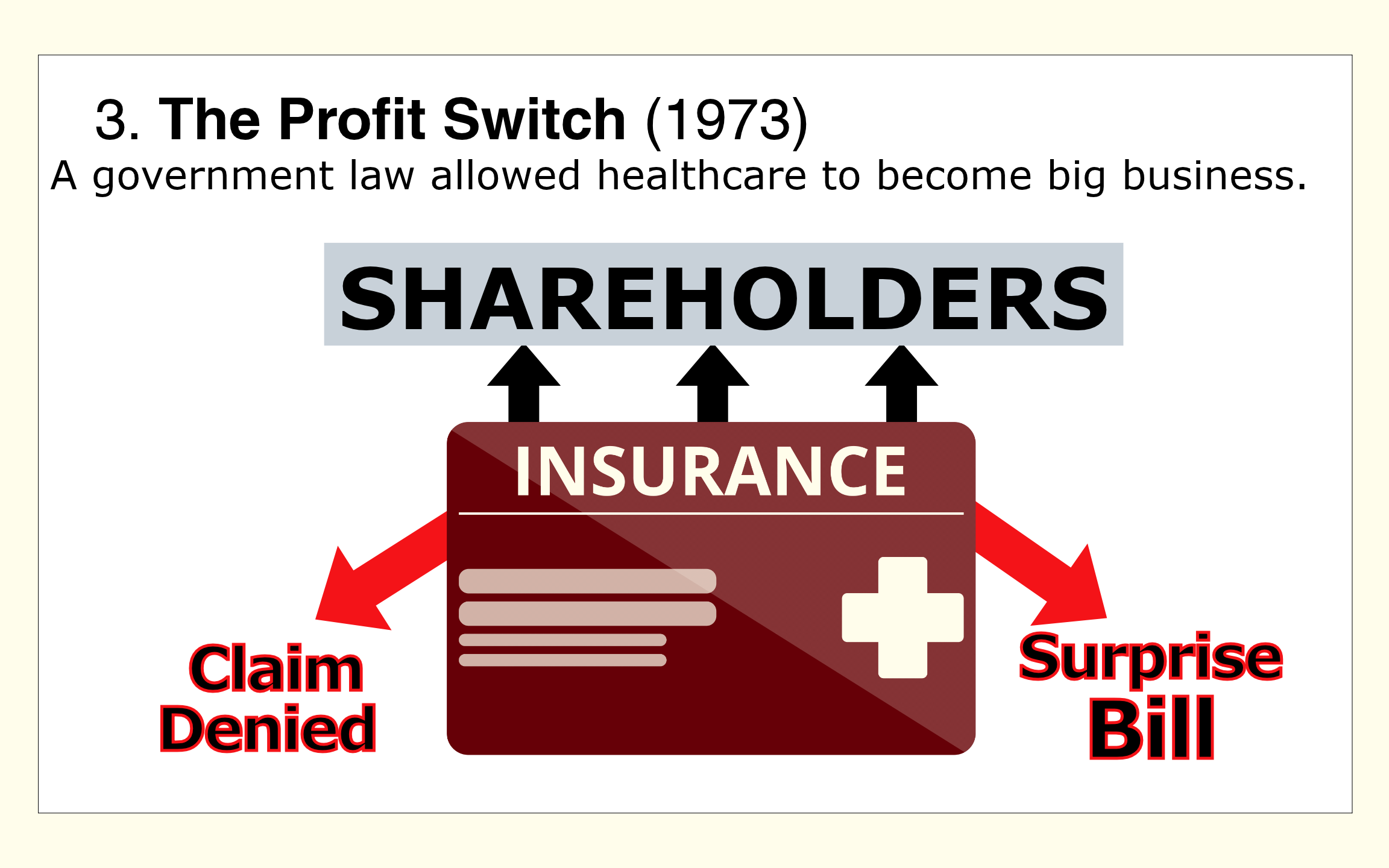
The Health Maintenance Organization (HMO) Act expanded access to healthcare which encouraged a shift from fee-for-service medicine to prepaid, managed care models.
Not-For-Profit Insurance companies were allowed to become For-Profit Health Insurance companies.
This promoted a different kind of plan. One paid a flat fee for each patient. If a company gets the same money no matter what, it makes more by providing less care.
-
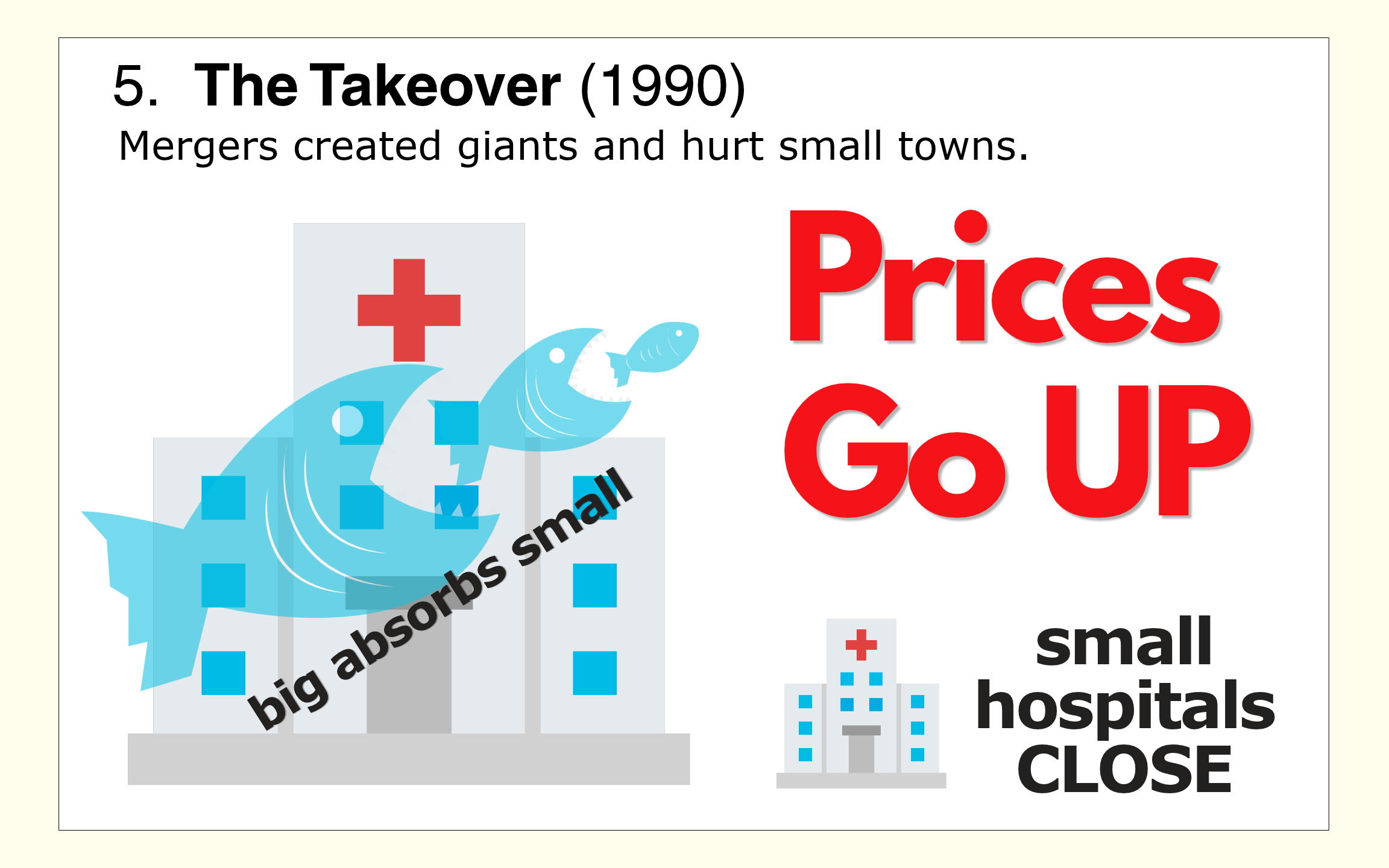
Hospitals merged into large regional systems.
Insurers consolidated into a few dominant companies.
With fewer competitors, providers gained pricing power.
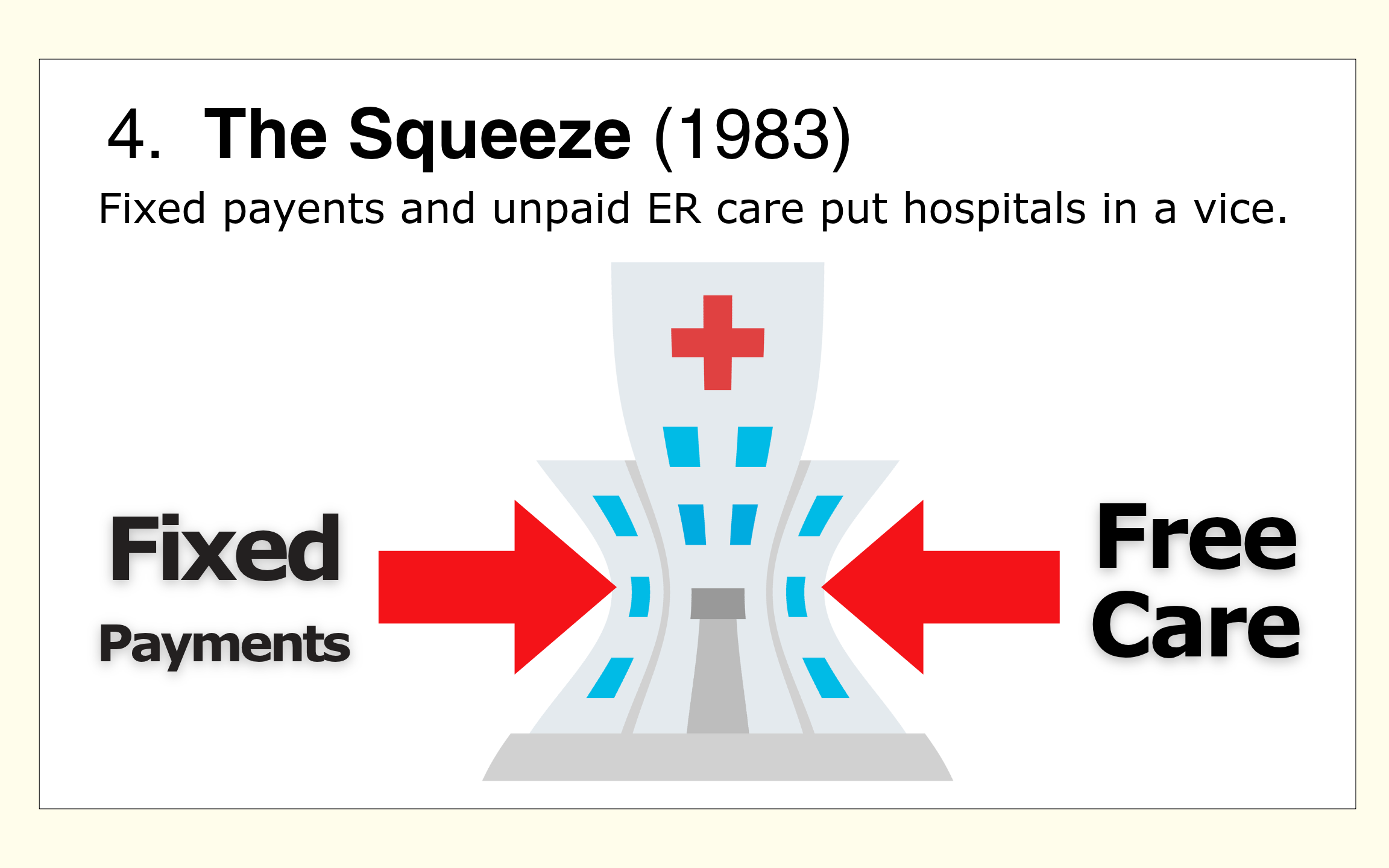
Medicare/Medicaid shifted from cost-based to fixed-fee reimbursement for large hospitals.
Due to EMTALA, hospital emergency rooms are required to provide care to anyone regardless of their ability to pay.
Private insurers often pay hospitals and clinics 150–250% of Medicare rates to compensate for services provided to the uninsured.
-
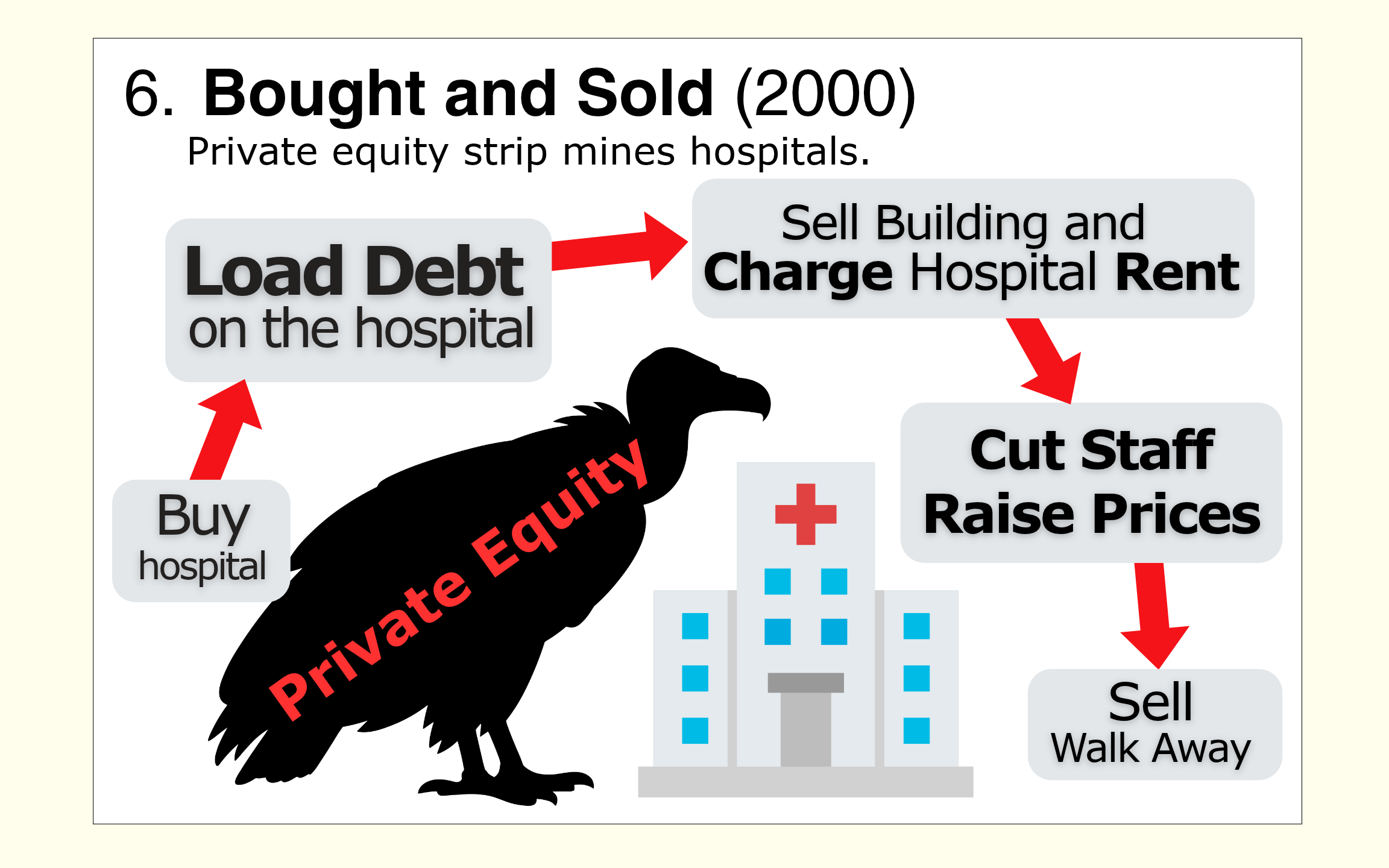
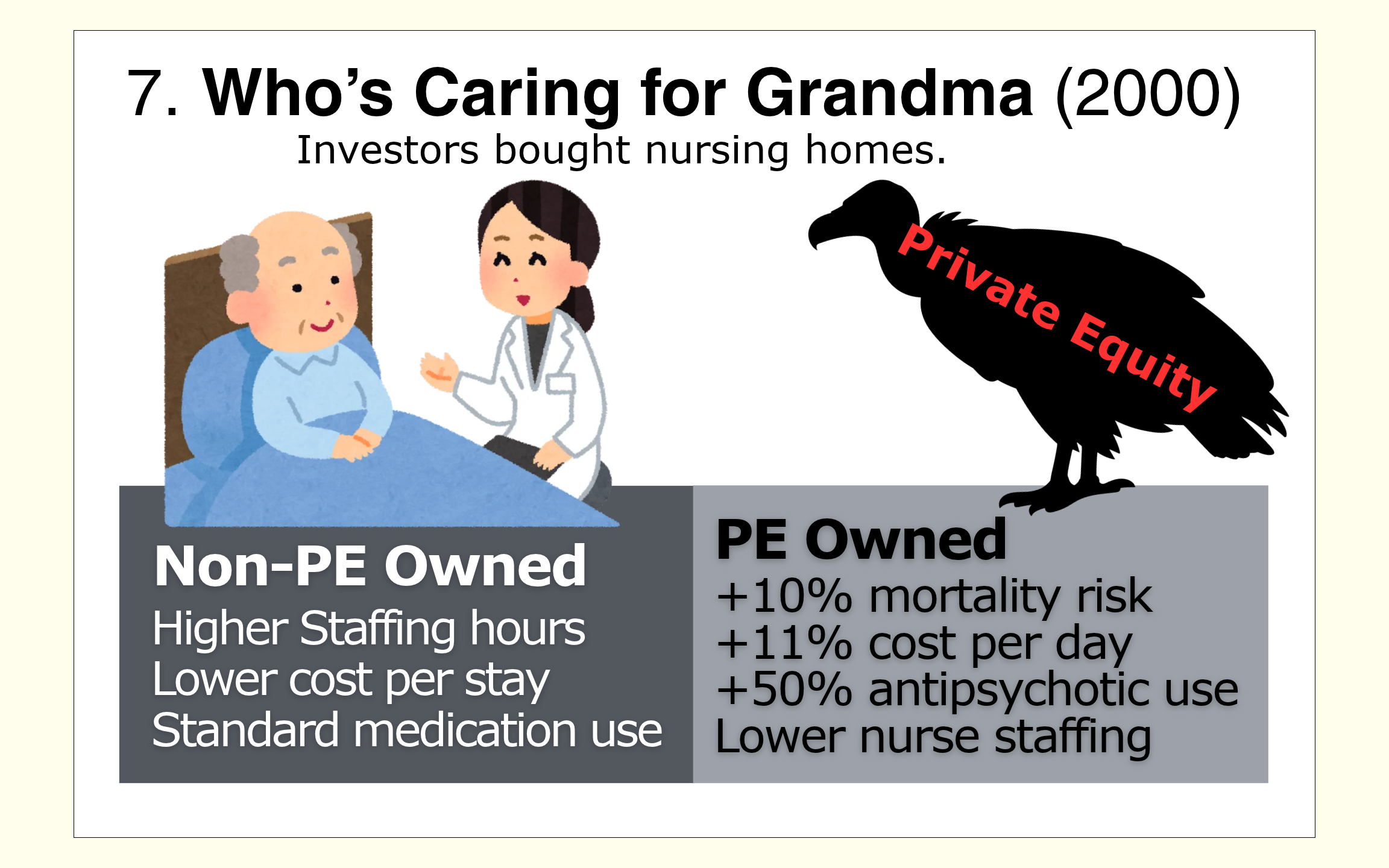
Private equity ownership in healthcare expanded rapidly buying up physician practices, emergency medicine groups, anesthesia, dermatology, nursing homes, and hospitals.
Private equity companies buy businesses, raise prices to increase their value, and then sell them
-
The ACA is voted into law creating another patch for the system
No more denials for pre-existing conditions. Insurers can't refuse you or charge you more because you've been sick.
Young adults stay covered. Kids can stay on a parent's plan until age 26.
Free preventive care. Checkups, screenings and many vaccines with no copay.
Help buying your own insurance. Marketplaces like Washington Healthplanfinder, with tax credits based on income.
Medicaid for working adults. States could expand Medicaid to adults earning up to 138% of the poverty level. Washington did in 2014.
-
Congress pulls out the patch
For 60 years, Medicaid has been one of the patches. The OBBB Act cuts federal Medicaid spending by up to about $1 trillion nationally over a decade.
ACA Tax credits expired and are not renewed by Congress.
Healthcare prices are rarely posted. Unlike other products, patients often cannot shop around, delay care, or go without care, which makes it easier for providers to pass on price increases.
Water. Fire. Roads. Hospitals.
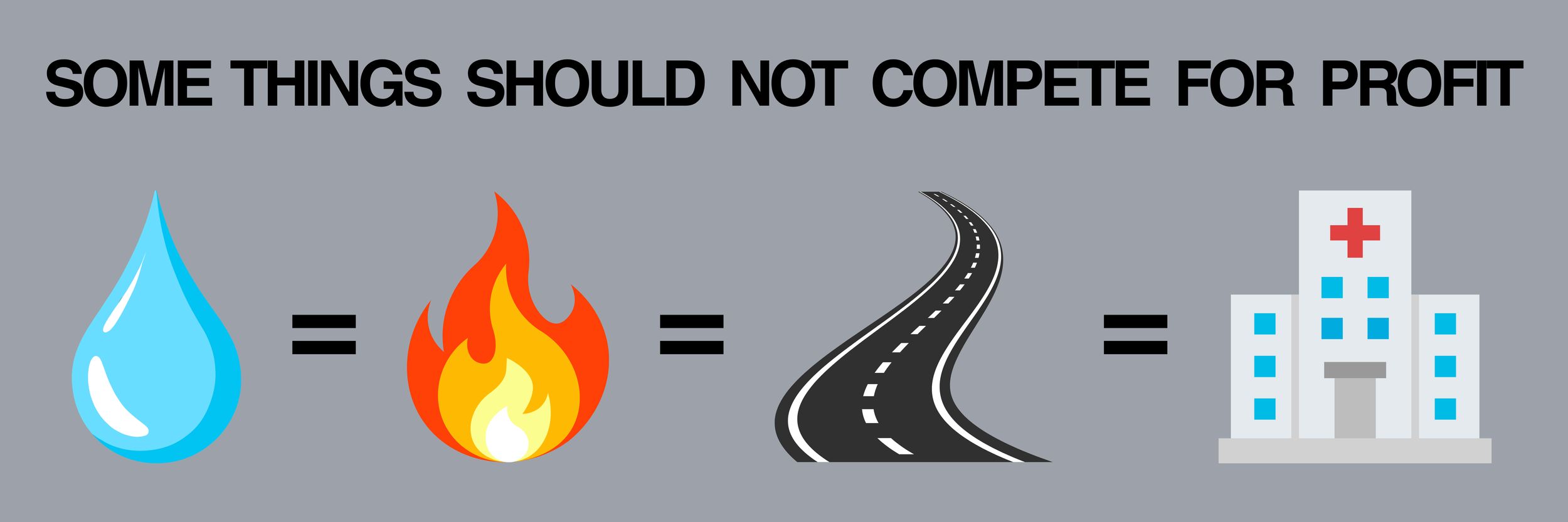
Fire departments, water systems, and roads all work better as one shared system, run to serve the community instead of to turn a profit.
A rural hospital is like the fire department, water system, and roads. There's only one, close enough to matter, and when the ambulance is moving, nobody's shopping around. You trust it will be there — the same way you trust the water will run and the fire truck will come.
So why do we let hospitals answer to investors instead of to us?
If we trust fire, water, and roads to serve the community first, we should trust our hospitals the same way. Not run for a return. Run for the people who have nowhere else to go.
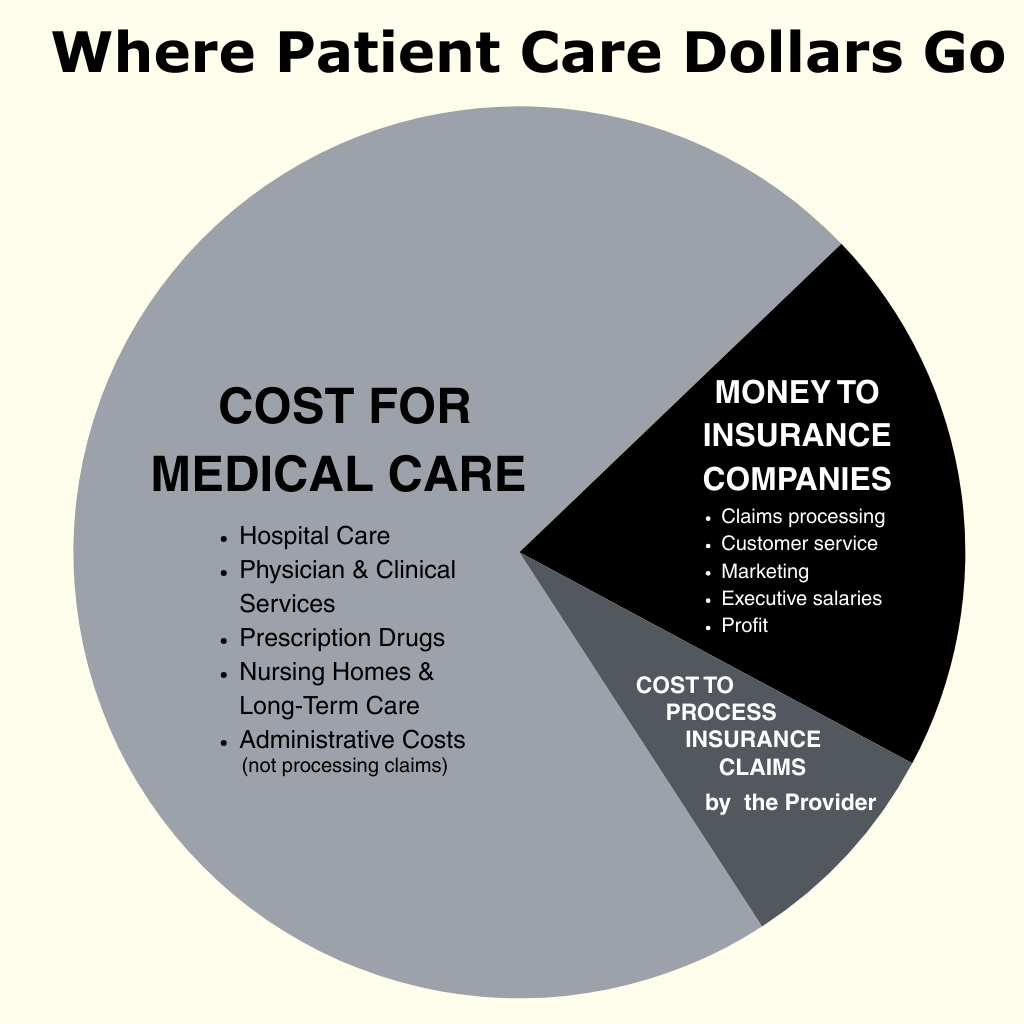
For every dollar, 70 cents goes toward care.
“Health care as two words refers to provider actions. Healthcare as one word refers to the system.
“We need to have the second in order to have the first””
After World War II, the United States helped rebuild the healthcare systems of Germany and Japan .
Reasoning: A healthier population can be a powerful tool for capturing the goodwill of the residents.