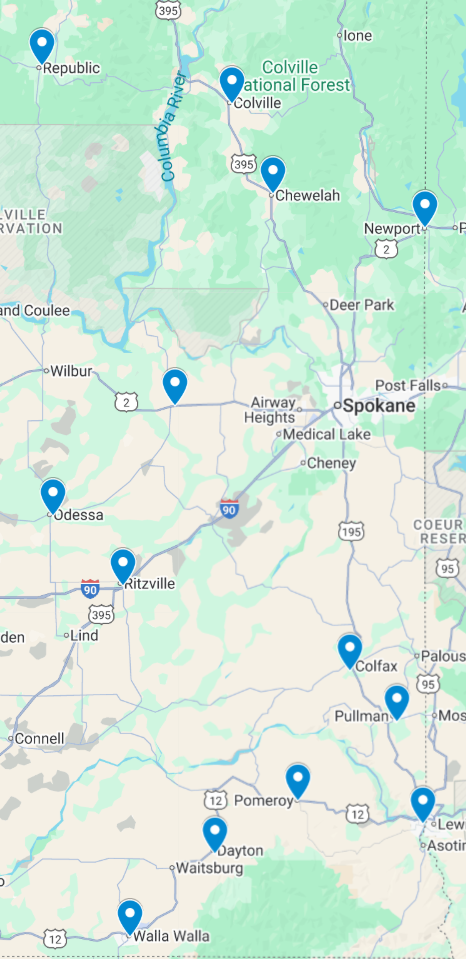
Rural Hospitals in District 5
Ferry County Memorial Hospital (Republic)
Providence Mount Carmel Hospital (Colville)
Providence St. Joseph’s Hospital (Chewelah)
Newport Hospital & Health Services (Newport)
Lincoln Hospital (Davenport)
Odessa Memorial Healthcare Center (Odessa)
East Adams Rural Healthcare (Ritzville)
Whitman Hospital & Medical Clinics (Colfax)
Pullman Regional Hospital (Pullman)
Garfield County Memorial Hospital (Pomeroy)
Dayton General Hospital (Dayton)
Tri-State Memorial Hospital (Clarkston)
Providence St. Mary's Medical Center (Walla Walla)
Top Vulnerable District 5 Hospitals
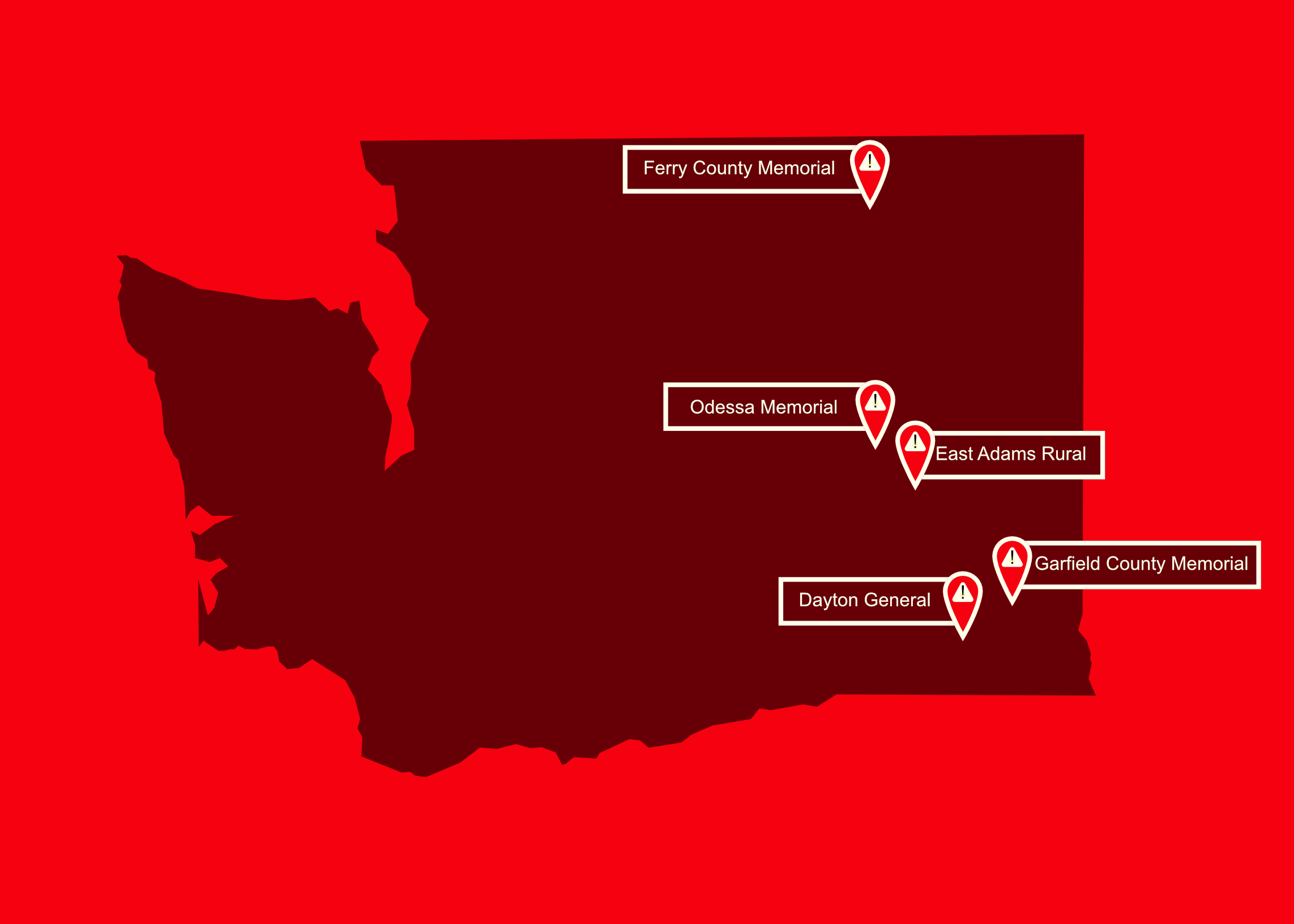
See our research below (data taken from hospitals’ public reporting)
Vulnerable Hospitals have less cash reserves and increasing uncompensated care due to people losing health insurance.
Due to cuts to medicaid and elimination of ACA subsidies.
-
The community of Ritzville must quickly pursue the Rural Emergency Hospital (REH) designation. I think this is the only viable option to keep 24 hour emergency care available in Ritzville.
REH is a federal designation that is not currently available in Washington State. Because this type of facility is not currently licensed in the State of Washington, a change in the laws and regulations must be pursued as soon as possible. This will require an effort from our state legislators and governor's office to modify the laws and allow such a category of healthcare facility to be operated in the Washington State. Once this licensure category is approved, the Washington State Department of Health (DOH) will be required to write regulations governing the operation of this type of facility. I would hope the DOH would begin working on these regulations immediately while the legislature works on their part of the process. Both the Legislature and the DOH processes could take weeks or months. Time is of the essence as East Adams Rural Healthcare (The Hospital) is out of resources to continue for much longer without such a change.
REH facilities receive a $3.4 million grant from the federal government. This should improve the Hospital's financial viability. However, the Hospital will no longer be paid for Medicare services as a critical access hospital. Federal healthcare services payments will decline from cost-based reimbursement to standard fee scale payments. Without Hospital specific information such as the last annual Medicare cost report, an estimate of the lost reimbursement cannot be made. I would suspect that decline is in the hundreds of thousands of dollars.
With the State recognizing REH status, will the Hospital continue to be paid Medicaid cost-based reimbursement? This has yet to be determined. I would hope the Hospital is talking with its legislators about continuing the current Medicaid cost-based reimbursement. Without such a continuation of current Medicaid reimbursement, I would expect Medicaid payments would also decline.
The Hospital has already announced the layoff of about 100 staff that will begin in January 2026. Many of these individuals should be able to find employment in Spokane and other neighboring hospitals. With the layoff of 100 hospital staff, economists suggest that the community can also plan on the layoffs of another 100 individuals that work in non-healthcare jobs in the local community.
When healthcare services are reestablished as a REH, the rehiring of layer-off healthcare workers should be forthcoming as long as those employees believe that the long-term prospect of employment is a real possibility. This reestablishment of healthcare services in Ritzville should prompt the rehiring of many non-healthcare individuals in the community.
The REH is not a full-service hospital. Healthcare services will be limited to outpatient services which include emergency room, laboratory, radiology, and other support services. Inpatient hospital care will be eliminated, and long-term care will become cost- prohibitive. With that said, I do not expect that all of the laid off employees will be rehired. Essentially, the Hospital will provide fewer services and only about two-thirds of the laid-off employees would be needed.
There has been discussion of the Hospital declaring bankruptcy. East Adams Rural Healthcare is actually Adams County Public Hospital District No. 2 . (District). The District is a political subdivision of the State of Washington. I am not aware of any public hospital district in the State of Washington that has declared bankruptcy. I am not sure if that is even possible. Some issues to consider:
If the Hospital declares bankruptcy, the District will continue to be a legal entity until such time as the Hospital's debts are paid. The local taxpayers would continue to pay taxes even if the Hospital closes. This is the worst case scenario.
I believe the State of Washington would also oppose bankruptcy. All hospital districts, school districts, and other municipal governments in Washington State issue bonds and other debts under the assumption that these debts are guaranteed by the taxpayers. If any municipal government defaults on its loans, the interest rates for all municipal corporations would increase because of the premise that “debts are guaranteed by the taxpayers” would no longer exist. This would have wide-reaching implications.
Other issues that should be considered:
Are there businesses in Ritzville that would relocate without emergency services available in Ritzville?
Will housing prices decline as a result of fewer jobs in Ritzville and fewer healthcare services?
Will elderly continue to reside in Ritzville without the availability of long-term care?
Since Ritzville would be a first for the State of Washington, it is difficult to anticipate all of the issues that must be addressed.
Hospital Report Cards:
The data for these graphs was generated by each hospital and is posted on the Washington State Department of Health website:
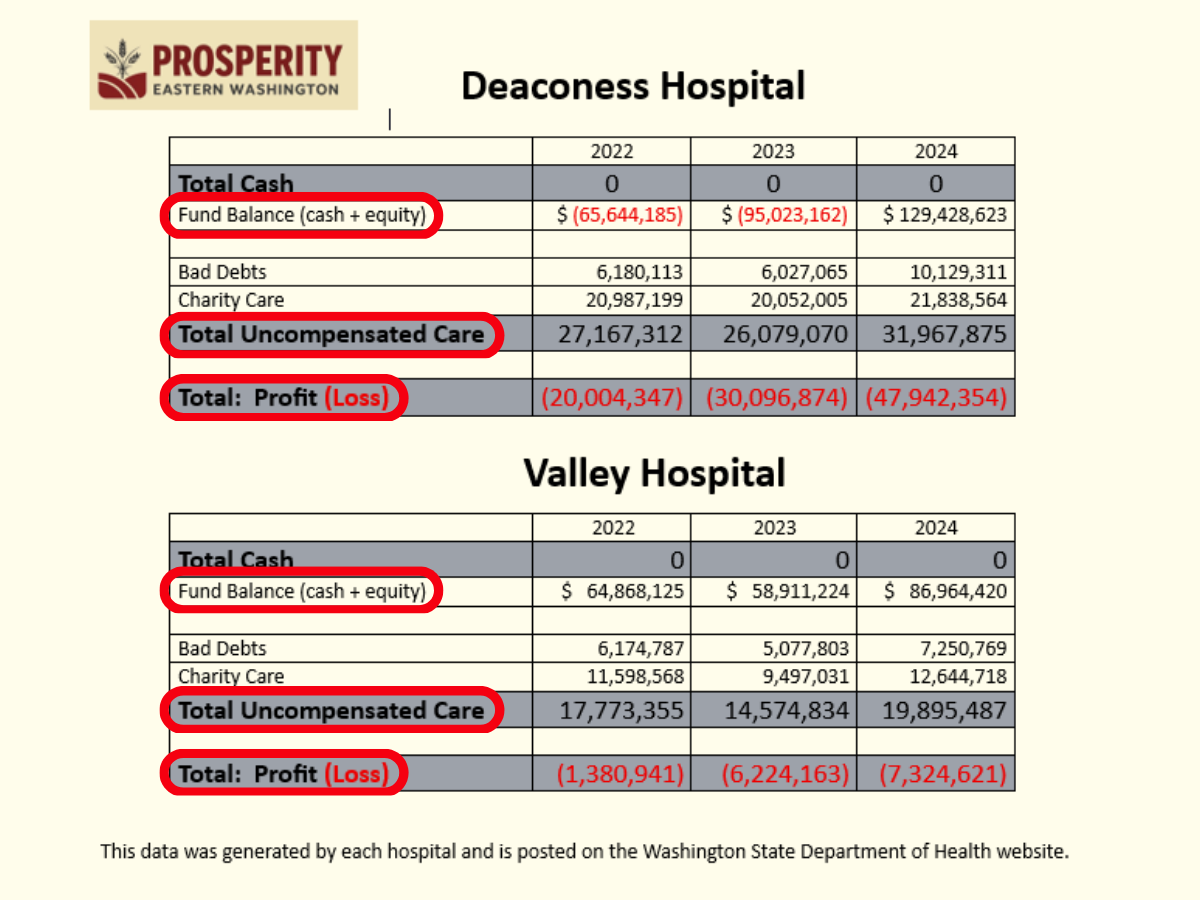
Cash Reserves: The amount of money a hospital has (to pay staff and purchase equipment/supplies).
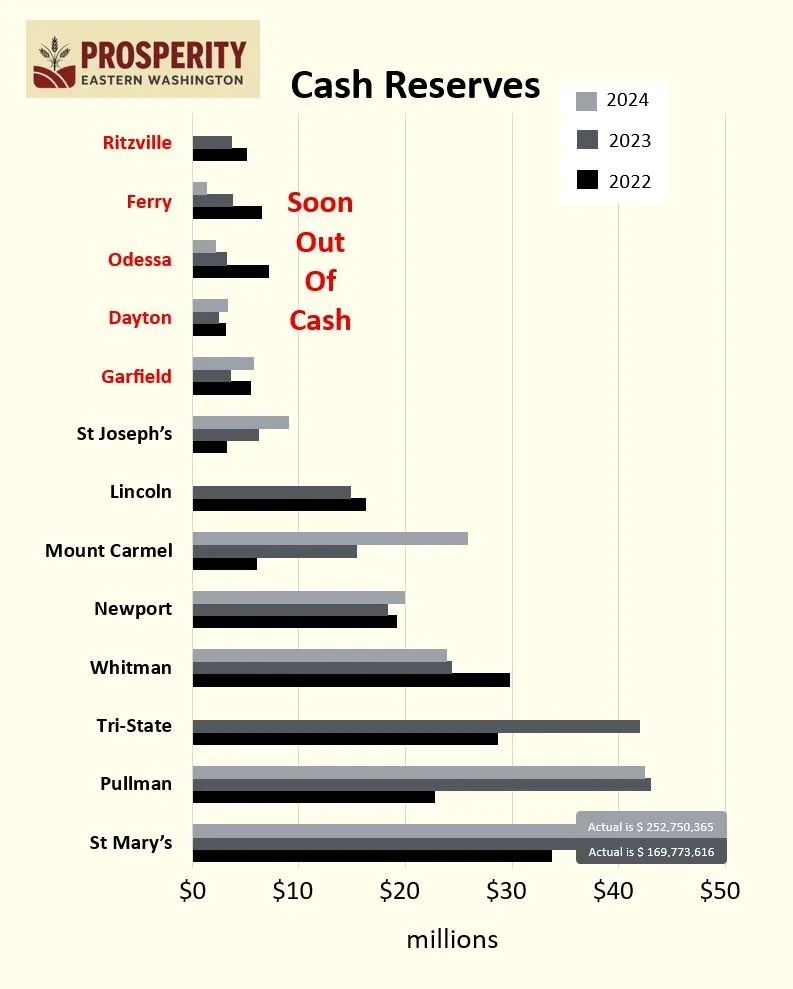
Some hospitals already operate at a loss: expenses are greater than revenue.
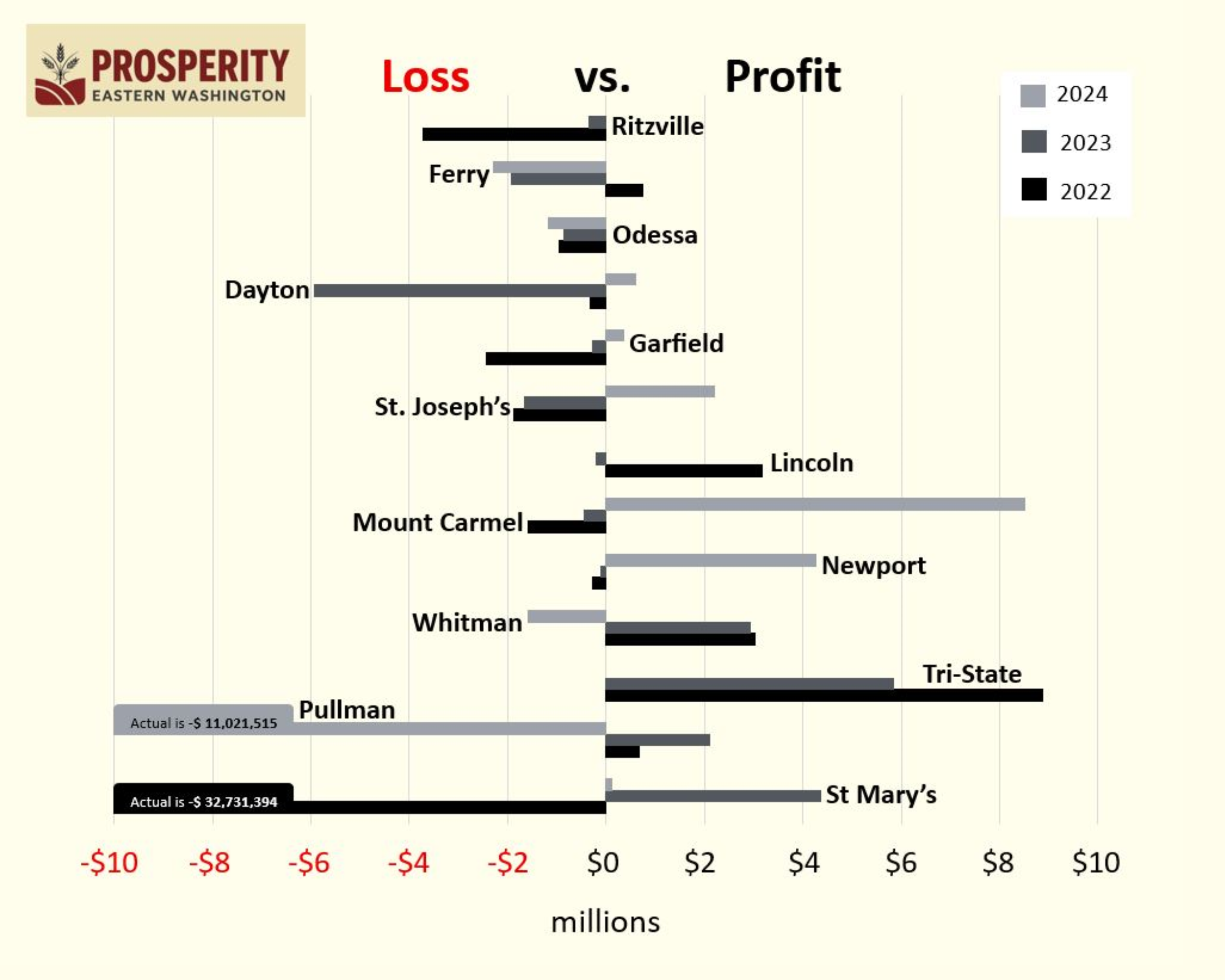
While some still scrape by a financial profit: revenue is greater than expenses.
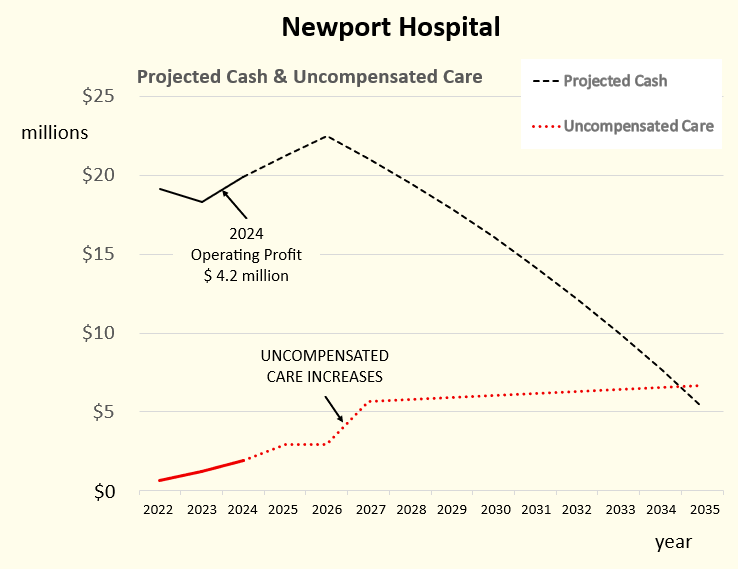
Newport is a healthier hospital, but will likely see cash reserves diminish.
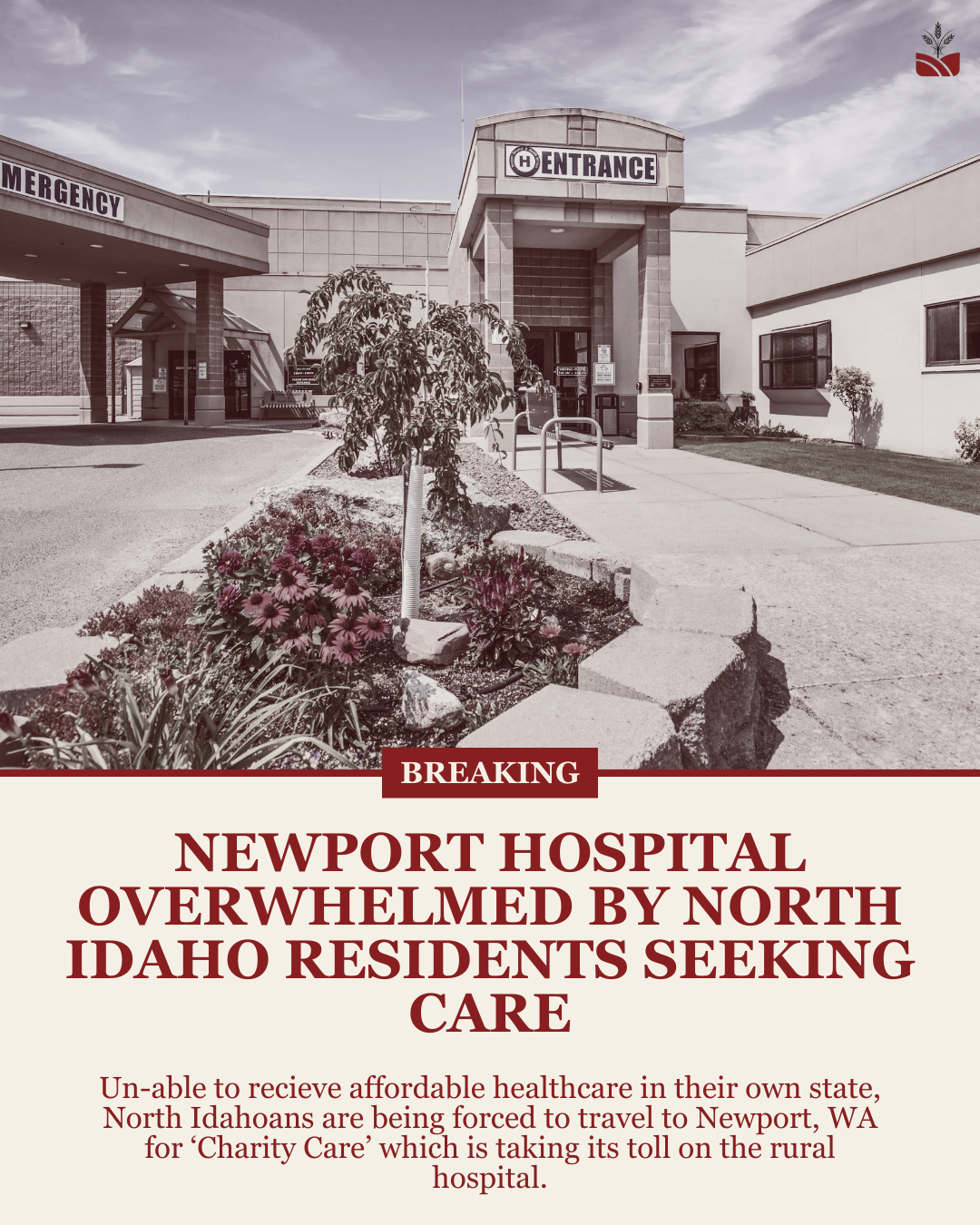
News Article: This picture is the link

Vulnerable Hospitals:
Uncompensated Care = Bad Debts + Charity Care
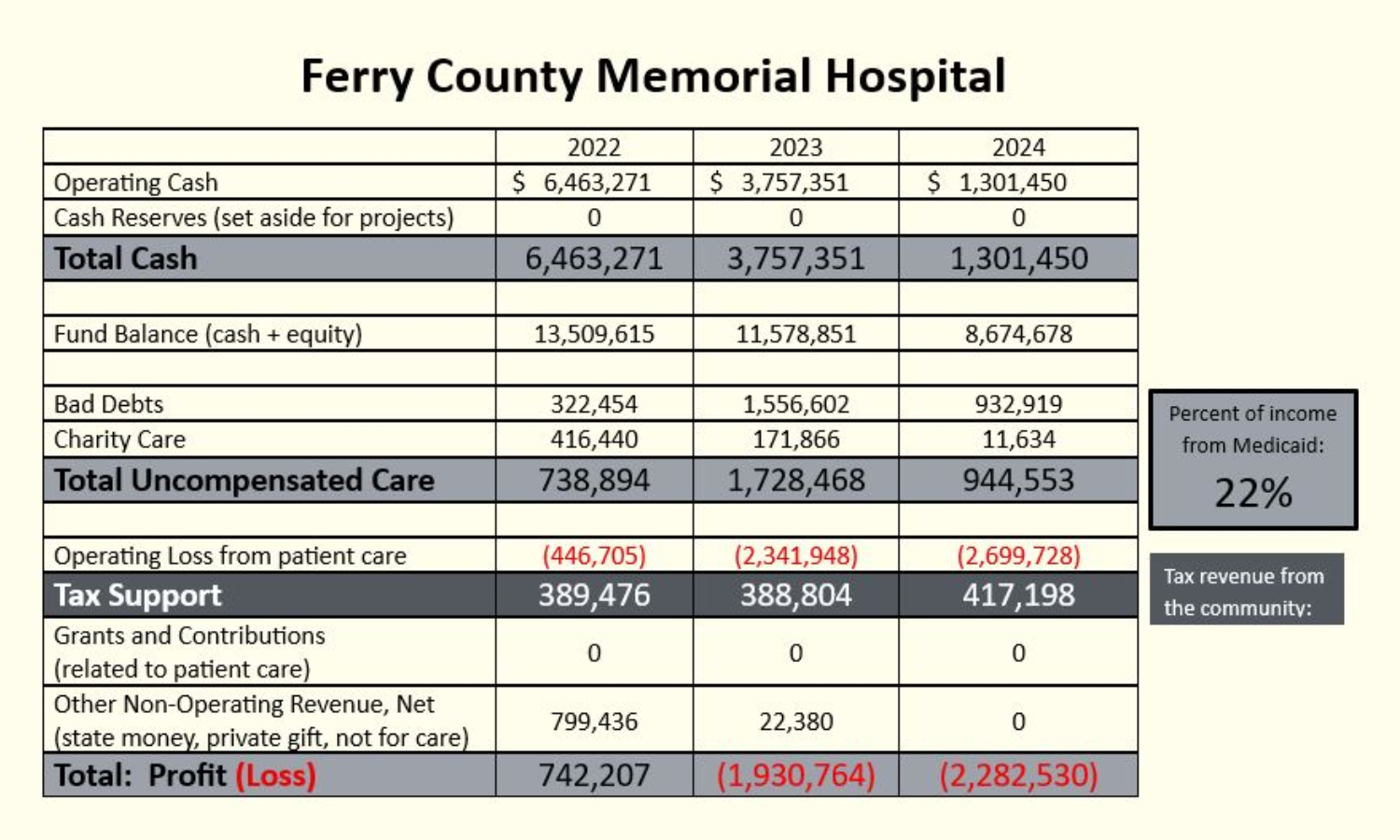
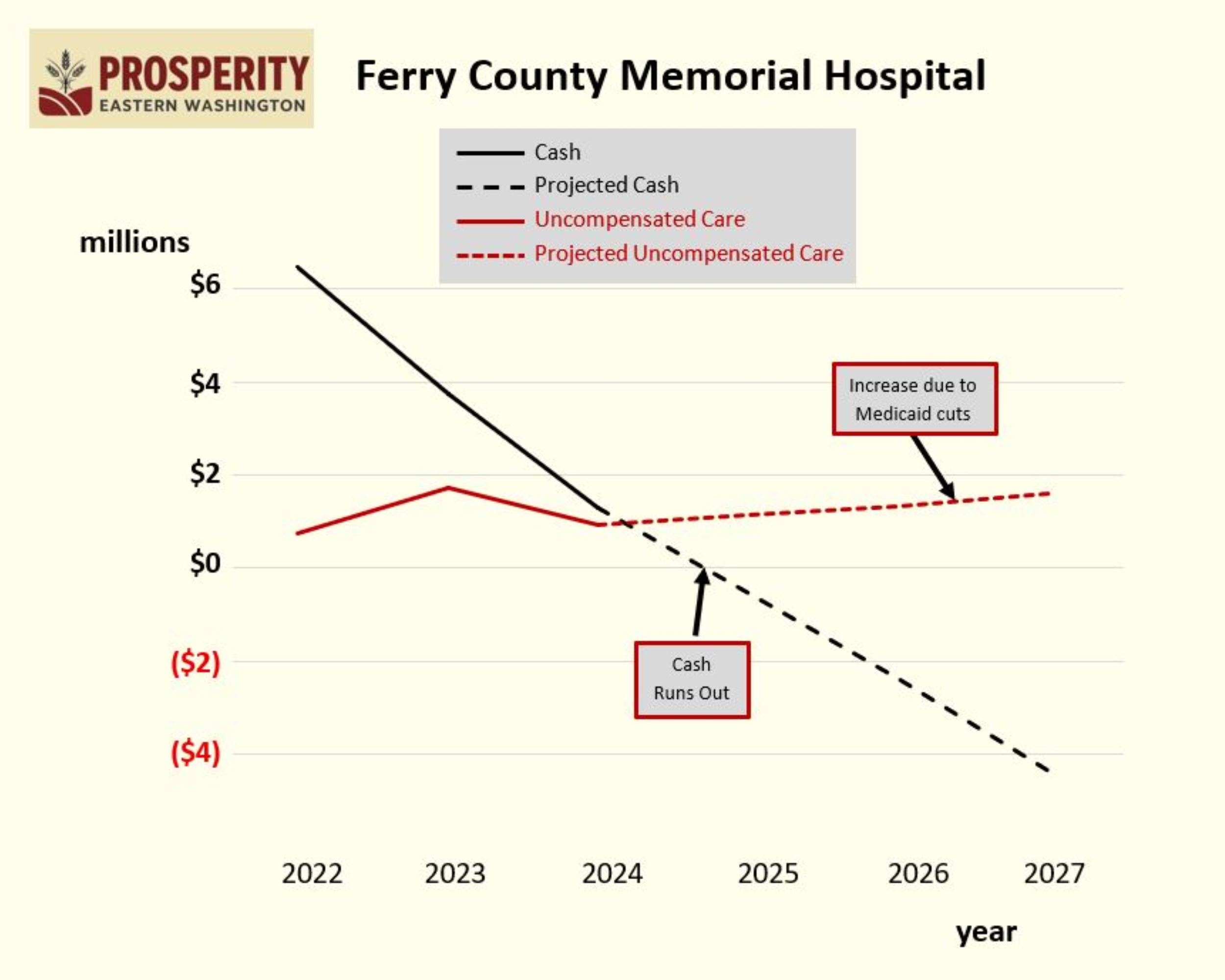
Without financial support, this graph shows that Ferry Hospital will be in the red in 2025.
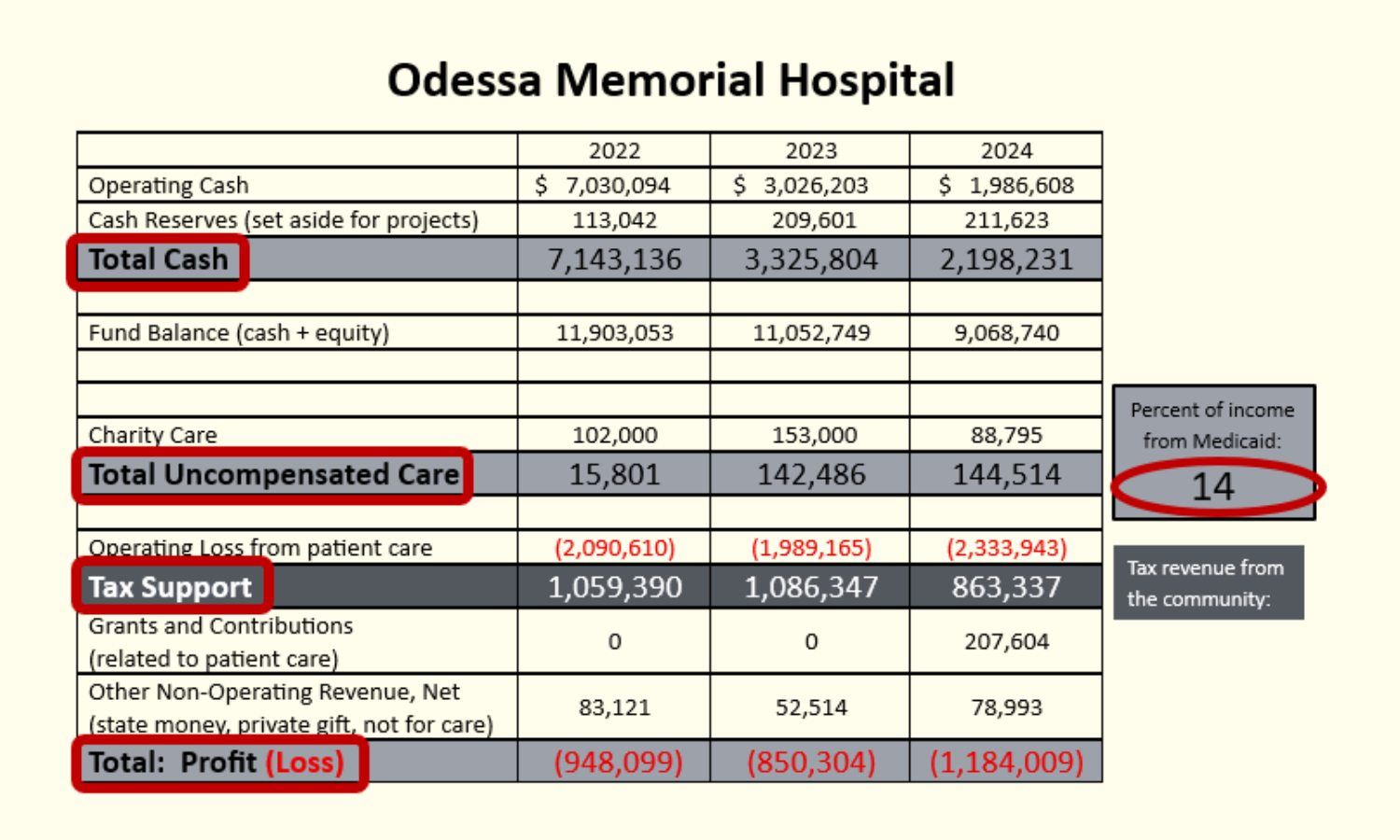
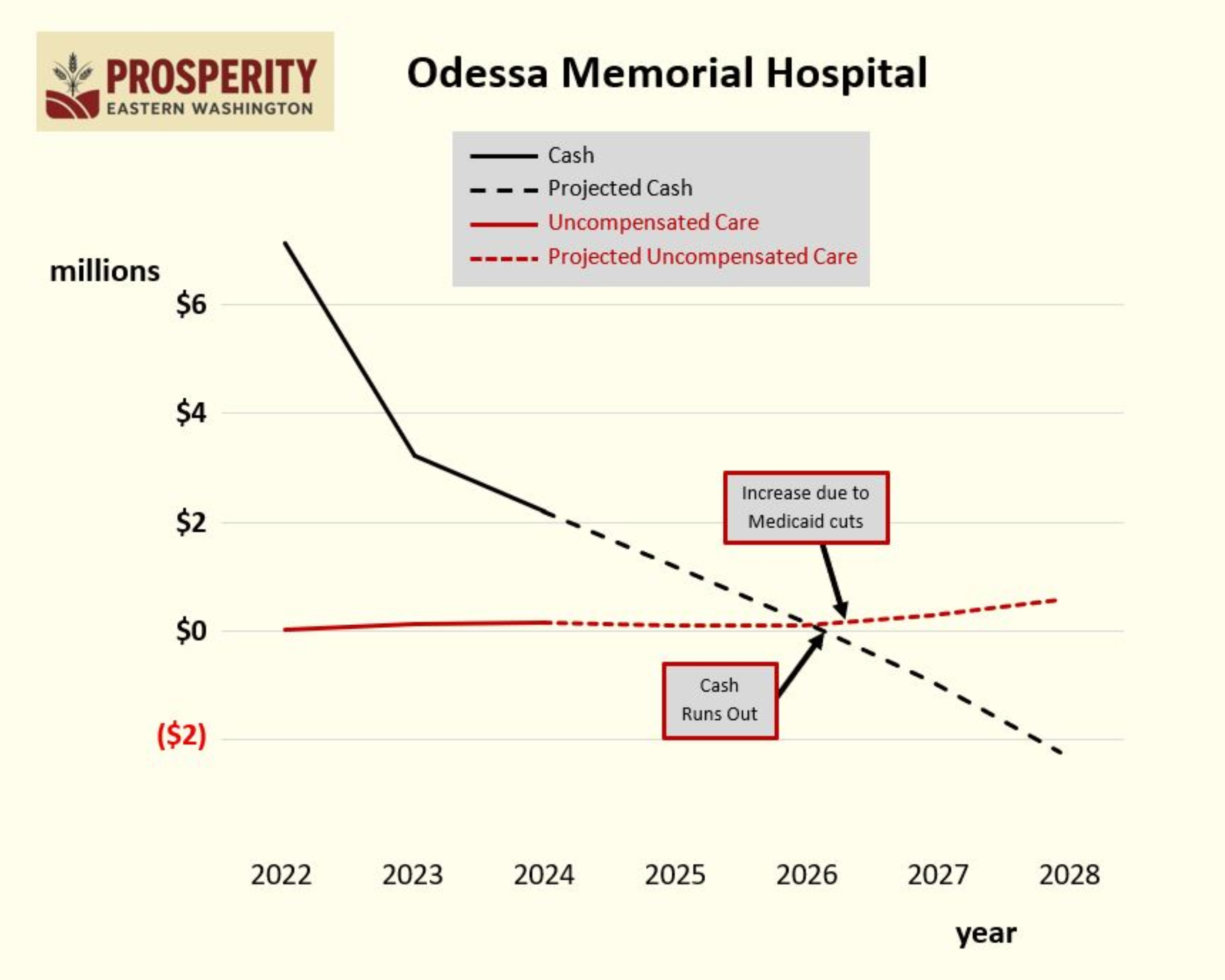
Without financial support, this graph shows that Odessa Hospital will be in the red in 2026.
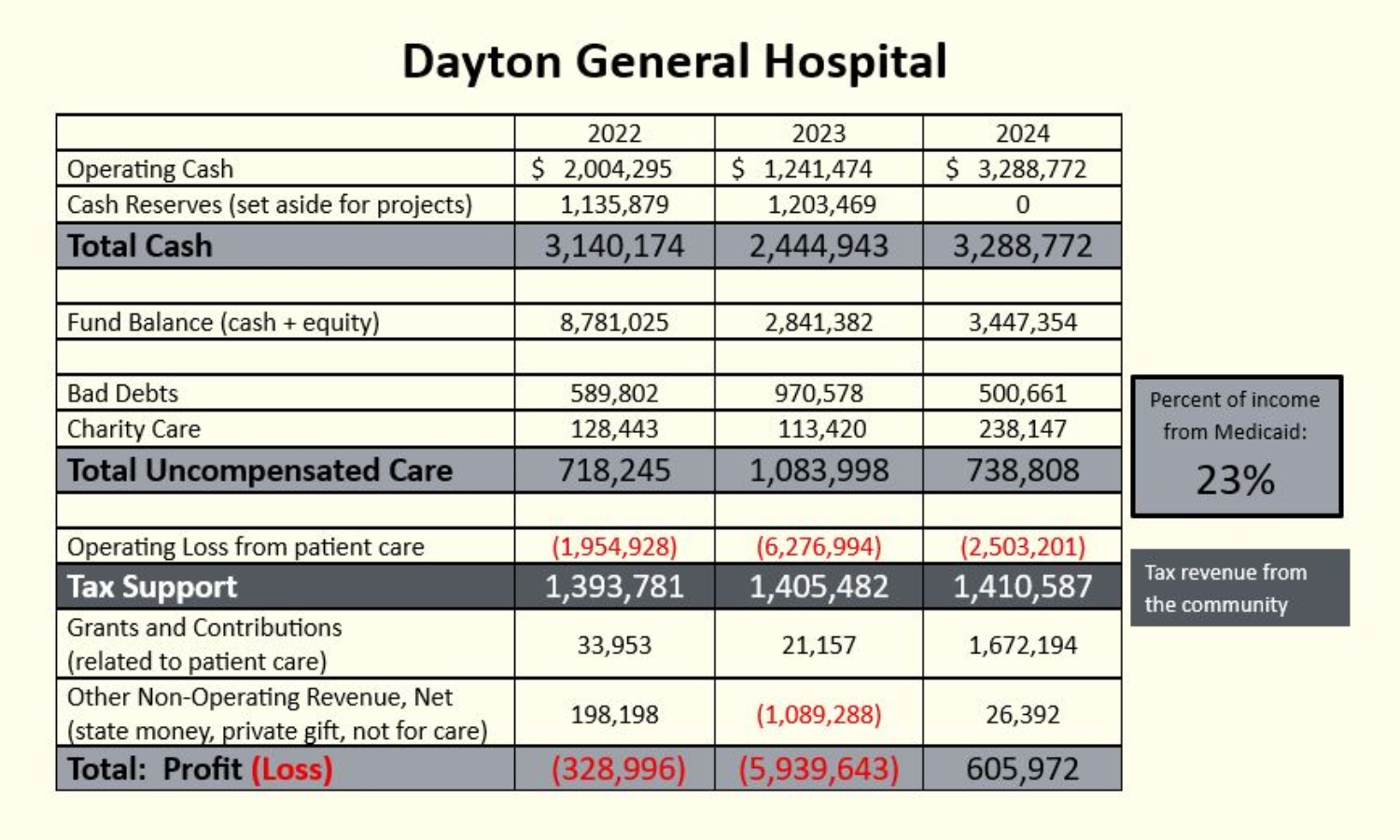
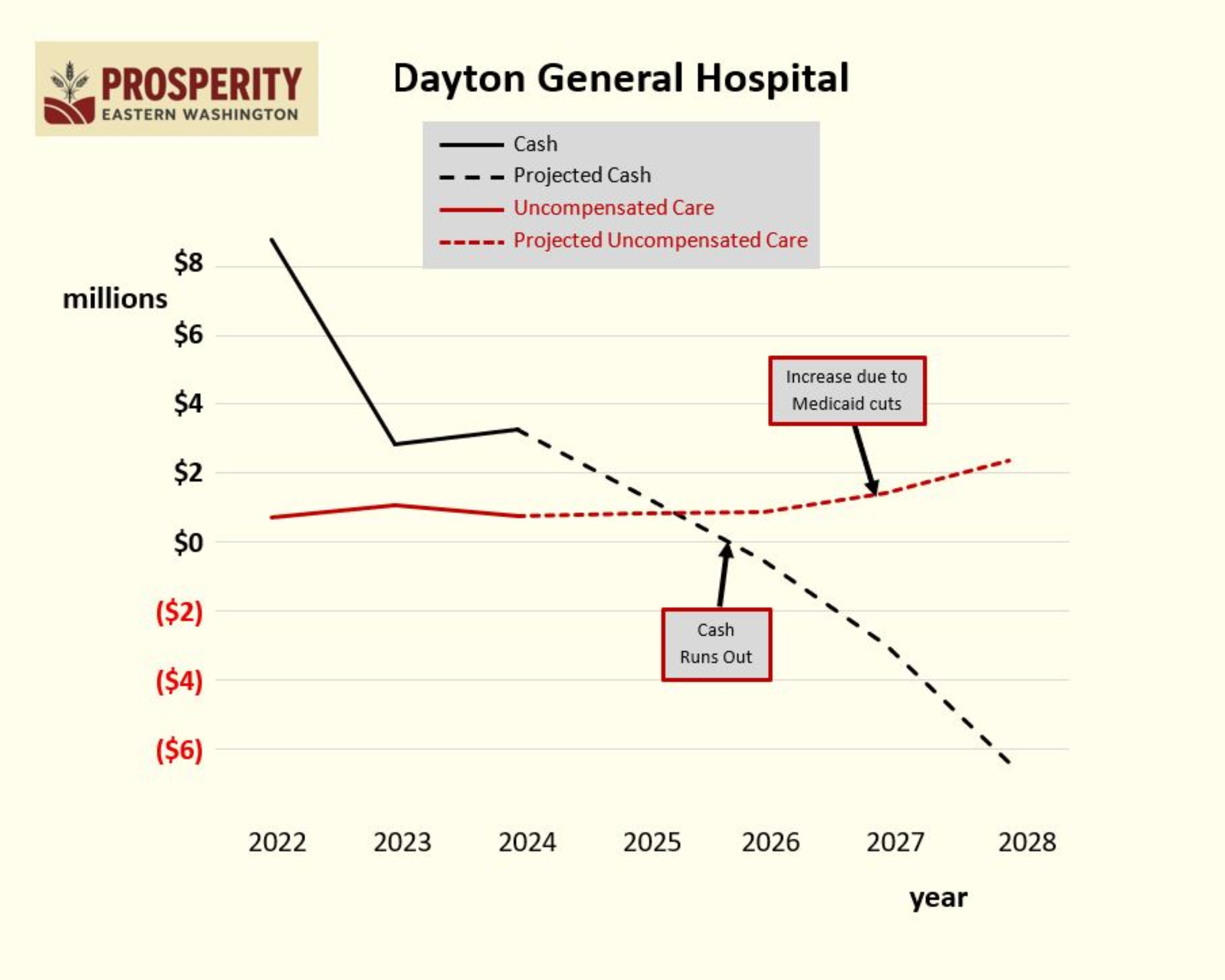
Without financial support, this graph shows that Dayton Hospital will be in the red in 2026.
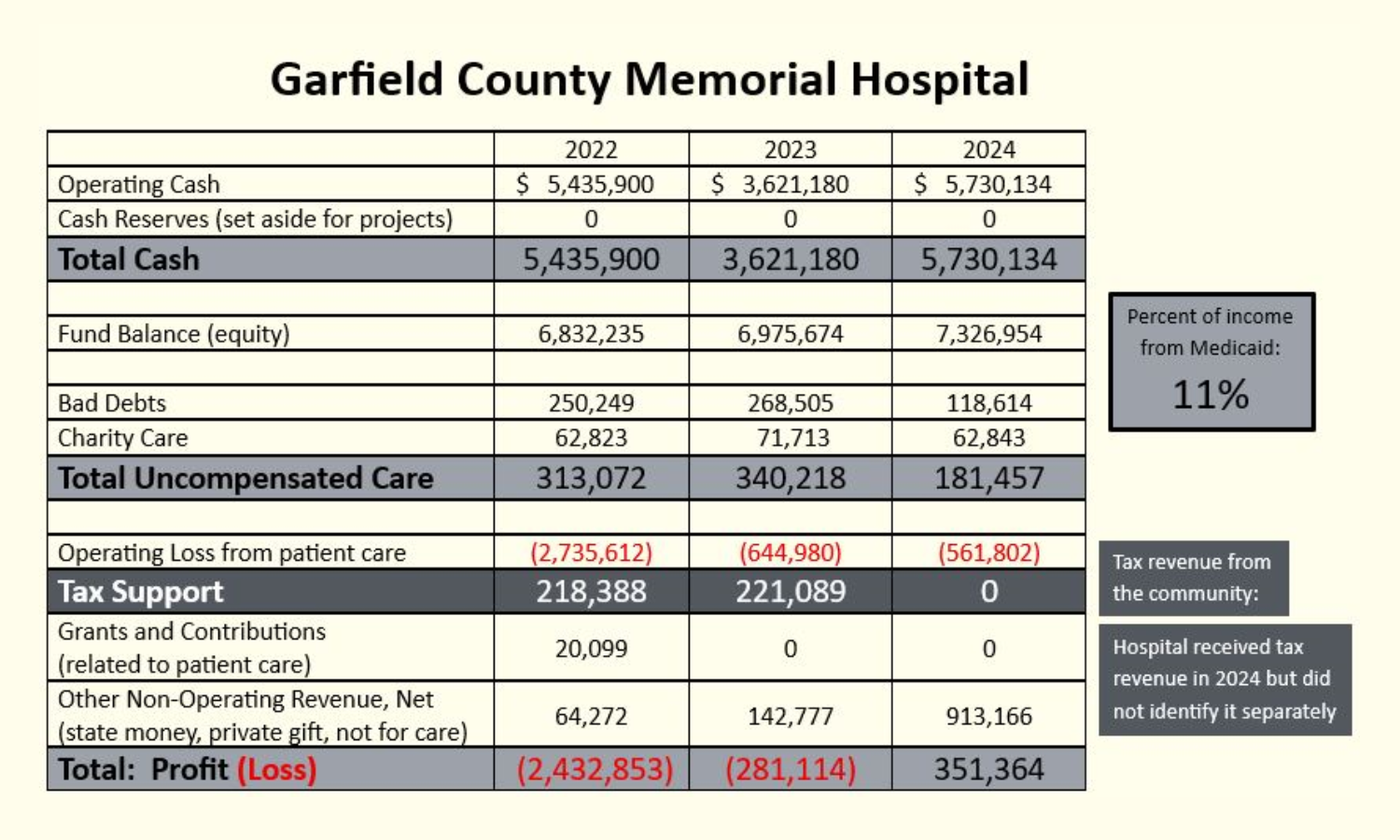
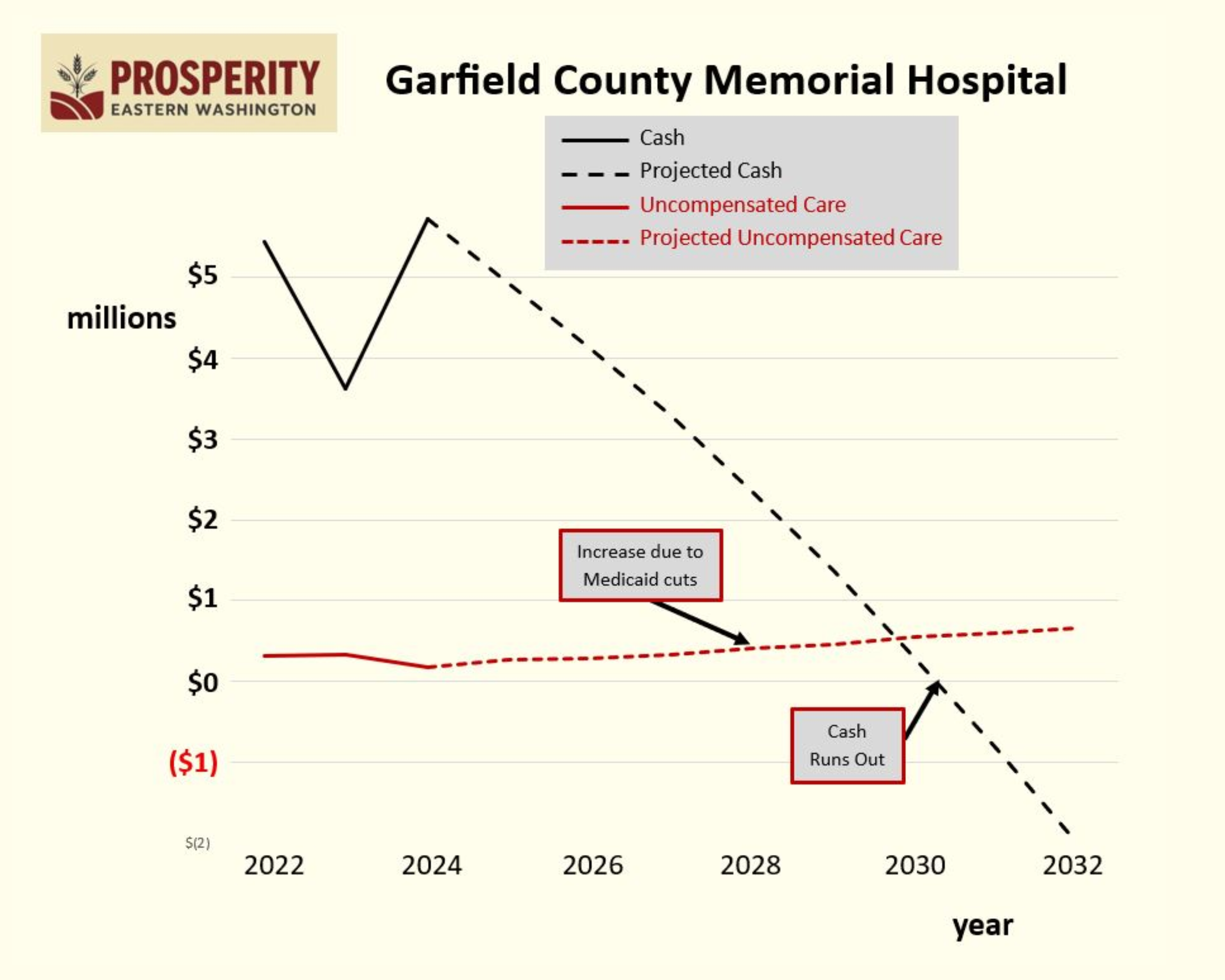
Without financial support, this graph shows that Garfield Hospital will be in the red in 2029.
East Adams Hospital: Due to mismanagement of funds, East Adams Hospital has applied to become the first REH in Washington State. The hospital will scale down it’s services to 24/7 emergency care and out patient care. No inpatient care will be available. Last month, 100 employees were laid off but It is likely that 2/3 of those employees will be retained.
Rural Emergency Hospitals, (REH): Financially struggling rural hospitals can transition to provide 24/7 emergency care and various outpatient treatments like lab work, radiology, and behavioral health with no observation stays for over 24 hours. No other care will be available.
Washington State: RCW 74.60.150
Washington State maintains a Hospital Safety Net Fund
These funds help financially vulnerable "critical access" and small rural hospitals.
Supports essential services like emergency rooms, obstetrics, or behavioral health services, which might otherwise be cut due to finances.
Ensures that your local hospital can continue to treat anyone who comes through its doors.
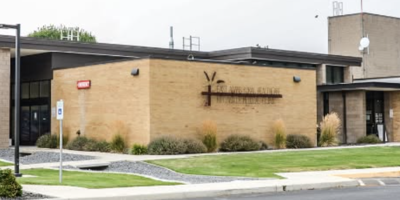
Ritzville Hospital has received $2 million from this bill, but is still struggling.

The Rural Health Transformation Program
As part of the One Big Beautiful Bill (OBBB), a fund was established to help rural hospitals.
The RHTP fund allocates $200 million of funds annually to each state for the next 5 years. To receive this funding, states must have an approved Rural Health Transformation Plan which requires the following:
preventative care,
long-term access,
highly skilled workforce,
innovative care and tech innovation.
This does not sufficiently offset rural hospitals’ losses with the significant increase in uncompensated care caused by OBBB.
-
Washington State applied for this funding from the RHTP. This funding will not replace the dramatic cuts imposed on rural hospitals due to the OBBB, but will be alocated to rural hospitals for infrastructure and technology improvements and support chronic disease management, behavioral health care, and maternal health care.
Take Action:
Attend your local board meetings (listed below) and ask good questions.
1. Implementation of the Rural Health Transformation (RHT) Program
Washington was recently awarded approximately $181 million for Year 1 of this federal/state initiative.
Question: "How is our district planning to utilize the Year 1 RHT funds to address local provider shortages, and what specific benchmarks will the board use to measure the success of these investments?"
Context: These funds are specifically earmarked for workforce development, behavioral health expansion, and technology/EHR infrastructure.
2. Financial Impact of the "One Big Beautiful Bill Act"
The Washington State Hospital Association (WSHA) has been vocal about the potential "disastrous" impact of this legislation on Medicaid payments.
Question: "What is the projected impact of the Medicaid payment cuts in the 'One Big Beautiful Bill Act' on our hospital's operating margin, and are there specific services (such as maternity or chemotherapy) that may be at risk of reduction?"
3. EMS & Inter-Facility Transport (HB 2110)
Rural hospitals rely heavily on EMS for transfers when a patient's complexity exceeds local capacity.
Question: "With the current staffing challenges facing rural EMS, what steps is the board taking to ensure we have reliable inter-facility transport for our most critical patients?"
Context: WSHA is currently supporting HB 2110 to provide more staffing flexibility for these transports.
4. Behavioral Health & Pharmacy Deserts
Eastern Washington continues to face significant gaps in these areas.
Question: "Given that 89% of rural census tracts are now designated as behavioral health shortage areas, does the board have a strategy for integrating mobile crisis support or telehealth into our primary care model?"
Meeting Times and Locations
-
Frequency: Monthly
Next Date: Wednesday, February 25, 2026 (based on the recurring last-Wednesday schedule)
Time: 3:30 PM – 5:00 PM
Location: 903 S. Adams St., Ritzville, WA 99169
-
Facility: Ferry County Memorial Hospital
Frequency: 4th Tuesday of every month
Next Date: Tuesday, February 24, 2026
Time: 10:30 AM
Location: HUB Conference Room, 36 Klondike Rd., Republic, WA 99166 (Virtual Zoom option typically available via their website)
-
Facility: Dayton General Hospital
Frequency: 4th Wednesday of every month
Next Date: Wednesday, February 25, 2026
Time: 9:00 AM
Location: Touchet River Conference Room, 1012 S. 3rd St., Dayton, WA 99328 (Hybrid option via MS Teams)
-
Frequency: 4th Thursday of every month
Next Date: Thursday, February 26, 2026
Time: 5:30 PM
Location: Odessa Memorial Hospital, 502 E Amende Dr, WA 99159 in the Guild Room
-
Facility: Garfield County Hospital
Frequency: 1st Monday of every month
Next Date: Monday, March 2, 2026
Time: 6:00 PM
Location: Senior Center, 695 Main Street, Pomeroy, WA 99347
News Articles:
East Adams Hospital District