Timeline
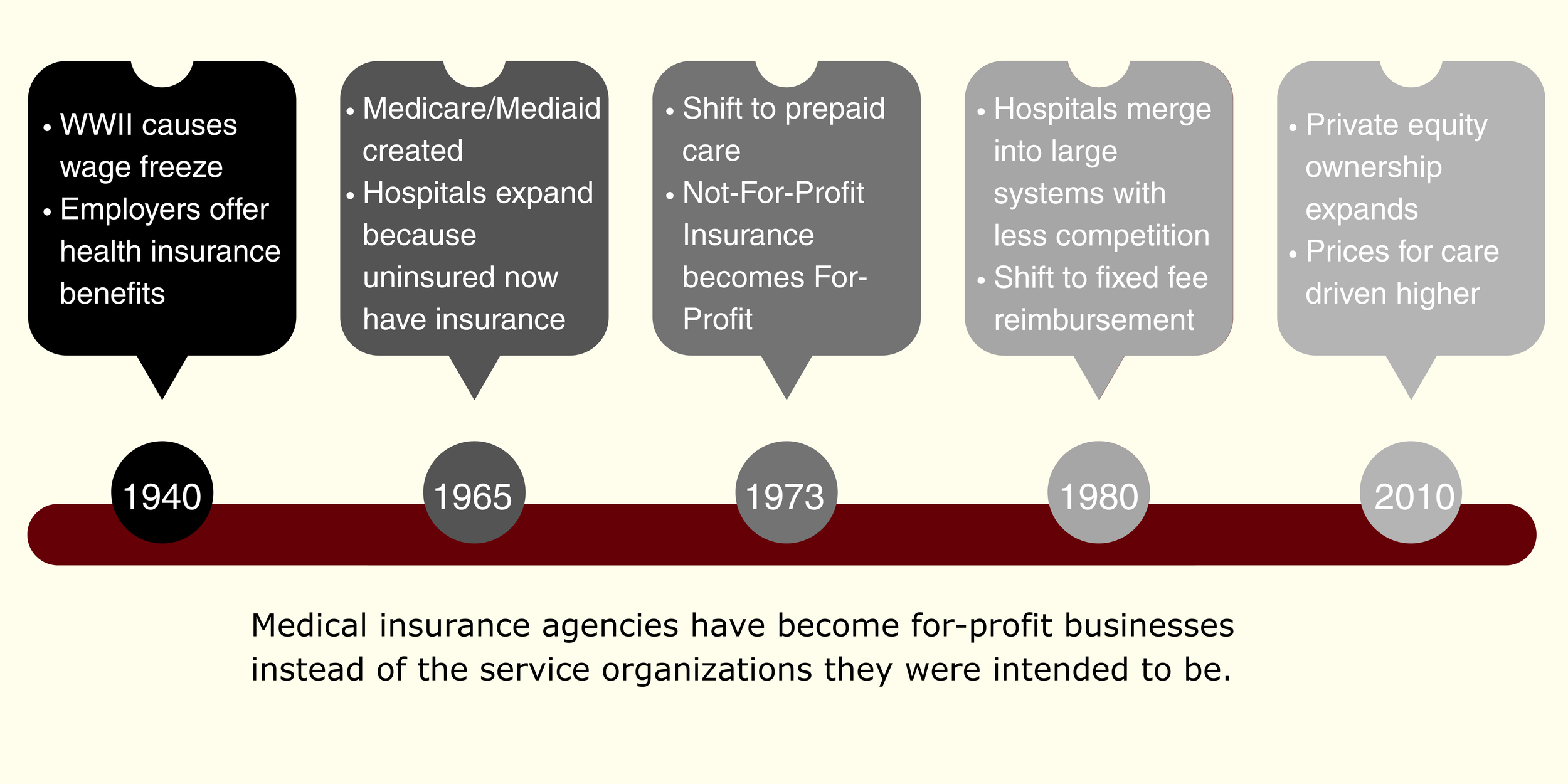
Most medical insurance agencies, hospitals, clinics and even doctors, have become for-profit business entities instead of the service organizations they were intended to be.
The History of Healthcare in the US
-
During World War II:
The federal government froze wages.
Employers started offering health insurance as a benefit to attract workers.
The IRS made employer health benefits tax-free.
-
When Medicare and Medicaid were created:
Millions of uninsured elderly and low-income Americans gained health insurance coverage.
All hospitals were paid on a cost basis (as defined and limited by the government).
The elimination of uninsured healthcare allowed hospitals to expand and improve services.
-
The Health Maintenance Organization Act expanded access to healthcare which encouraged a shift from fee-for-service medicine to prepaid, managed care models.
Not-For-Profit Insurance companies were allowed to become For-Profit Health Insurance companies.
-
Hospitals merged into large regional systems.
Insurers consolidated into a few dominant companies.
With fewer competitors, providers gained pricing power.
Medicare/Medicaid shifted from cost-based to fixed-fee reimbursement for large hospitals.
Due to EMTLA, hospital emergency rooms are required to provide care to anyone regardless of their ability to pay.
Private insurers often pay hospitals and clinics 150–250% of Medicare rates to compensate for services provided to the uninsured.
-
Private equity ownership in healthcare expanded rapidly buying up physician practices, emergency medicine groups, anesthesia, dermatology, nursing homes, and hospitals.
Private equity companies buy businesses, raise prices to increase their value, and then sell them
Healthcare prices are rarely posted. Unlike other products, patients often cannot shop around, delay care, or go without care, which makes it easier for providers to pass on price increases.
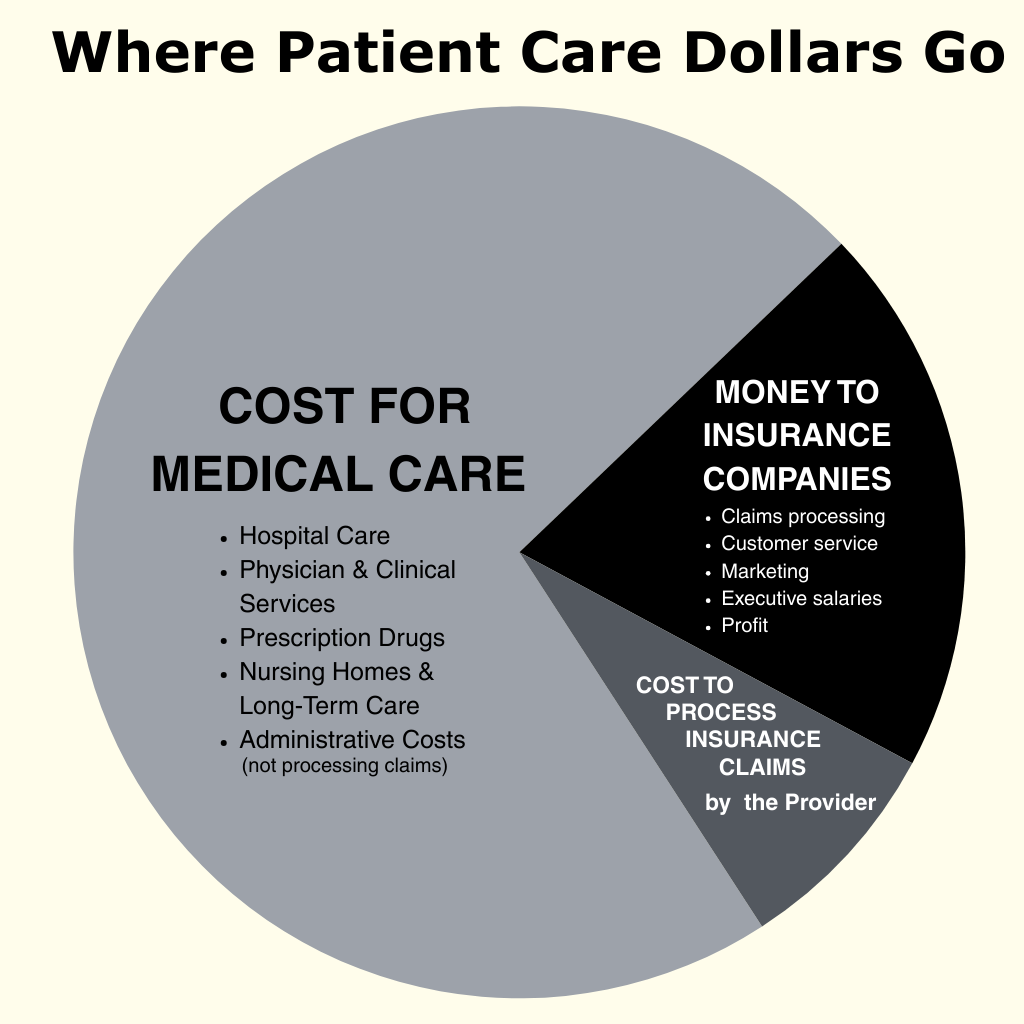
For every dollar, 70 cents goes toward care.
“Health care as two words refers to provider actions. Healthcare as one word refers to the system.
“We need to have the second in order to have the first””
After World War II, the United States helped rebuild the healthcare systems of Germany and Japan .
Reasoning: A healthier population can be a powerful tool for capturing the goodwill of the residents.